

As industrial systems grow increasingly interconnected, radio frequency (RF) communications are becoming vital components of operational technology (OT) within critical infrastructure. From remote monitoring to real-time control, RF technologies offer flexibility and reach, but they also introduce unique vulnerabilities. Here are a few things organizations must consider when deploying RF systems securely and effectively.
Choose the Right RF Technology
Not all RF solutions are created equal. Selecting the appropriate technology depends on factors like range, bandwidth, latency tolerance, environmental conditions, and risk tolerance. Whether it is LoRaWAN for low-power wide-area networks or private LTE for high-throughput applications and segmented communication, aligning RF capabilities with operational needs is foundational.
Build Security into the Architecture
RF communications are inherently exposed to threats like interception, jamming (Denial of Service – DOS), and man-in-the-middle attacks. To mitigate these risks:
- Assess organizational risk tolerance by acknowledging that not all networks require, or can feasibly sustain, the same level of protection. Prioritize security investments based on criticality, exposure, and operational impact
- Adopt strong encryption protocols to protect data in transit
- Implement layered security architectures that combine physical security controls, network segmentation, access controls, logging, and application-level defenses
- Continuously monitor RF traffic for anomalies, unauthorized access attempts, and disruptions
- Maintain clear visibility into data location, usage, and storage, especially when leveraging cloud-based services
- Maintain solid documentation throughout the lifecycle of the operation network
- Conduct supply chain due diligence throughout the deployment lifecycle by continuously assessing vendor risk and software integrity, and updating practices as appropriate
Invest in O&M and Cyber Hygiene
The majority of cyber incidents stem from misconfigurations, poor network architecture, and unaddressed vulnerabilities. At a minimum, an Operations and Maintenance (O&M) program should include the following elements to establish a baseline of cybersecurity hygiene:
- Budgets for sustained O&M are critical to enable and maintain strategic allocation of resources
- Comprehensive asset inventory is paramount; without it, unidentified assets cannot be effectively defended, monitored, or managed
- Remote access and exposed connections, whether for personnel or automated processes, should be limited strictly to necessary services and explicitly authorized
- Configuration management to track and validate system changes
- Cybersecurity training and staffing must ensure that technical personnel are both knowledgeable and supported by appropriate staffing levels
- Routine audits to verify system integrity over time
- Vulnerability assessments to identify newly exposed risks
- Well-maintained and safeguarded documentation establishes repeatable processes and delivers clear, actionable guidelines to support consistent and efficient operations
- Clearly defined roles and responsibilities help prevent misconfigurations, unintentional actions, and unauthorized use
- Mitigate and track exposed vulnerabilities, with particular attention to legacy devices that may lack modern protection
- Eliminate all shadow IT and OT to reduce the risk of undocumented access and the introduction of unmanaged assets into the environment
- Incident response and recovery planning supports readiness to detect, contain, and recover from adverse events, preparing the organization for a “bad day”
Integrate with ICS Environments Thoughtfully
In RF-based OT systems, harmony with existing Industrial Control System (ICS) environments is foundational. A systems thinking approach reveals that true integration goes beyond signal transmission. It demands thoughtful alignment with legacy infrastructure, proactive mitigation of single points of failure, and intentional design for resilience and redundancy. These principles ensure that RF deployments not only function within complex ICS ecosystems but also strengthen them, supporting long-term reliability and adaptability in industrial settings.
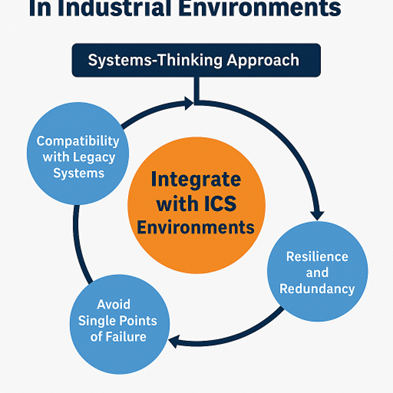
A systems-thinking approach helps map interdependencies and anticipate cascading risks.
RF technologies offer immense potential, but only when deployed with foresight and rigor. By combining technical precision with strategic planning, organizations can unlock the benefits of wireless communication while safeguarding the reliability of their critical infrastructure.
Ready to harness the full potential of RF technologies? Contact sFontes today to schedule a strategy session and ensure your wireless deployment is both technically sound and strategically resilient.